
Sablet Home ~ Maison des Pelerins


                                  Vacation Rental Homes in the Heart of Provence   (510) 499 4421
Christmas in Provence


Christmas is a very special time to visit Provence.

Towards the end of November, the street lights – wishing “Joyeuses Fetes” and “Joyeux Noel” - start going up (remaining unlit) in the towns and villages (even the very small villages), as the Provencaux  make preparations for the “Saison des Fetes.” Provencal Christmas traditions have been handed down through the generations and are observed to varying degrees depending on each family and each village.  There are however, many that are common to all parts of Provence as you will notice as you browse through the stores and at the Christmas markets throughout the Region.


The season officially begins on December 4th with the feast of St. Barbe and continues on through to Christmas Eve, Christmas Day and New Years Eve (St. Sylvestre), ending on the 6th January with the Epiphany or the Feast of the Three Kings.


Dec. 4th – the Feast of St. Barbe.  This day signals the beginning of the Season, which  starts by growing wheat and lentils on small dishes covered with wet cotton wool.  By Christmas Eve, the sprouts decorated with ribbons, will provide the “grass” for the Nativity scene. The grains symbolize a good harvest and favorable weather for the coming year.  As legend goes… if the sprouts are straight and tall and green … the coming year will be prosperous! 


Mistletoe, well known in the U.S. – is never, never used as a part of the Christmas decorations…… It Is  Considered Bad Luck!!

So remember…..Mistletoe? …..Absolument Pas!!


From St. Barbe to Christmas Eve, the people of Provence shop and cook for the “Fetes” -

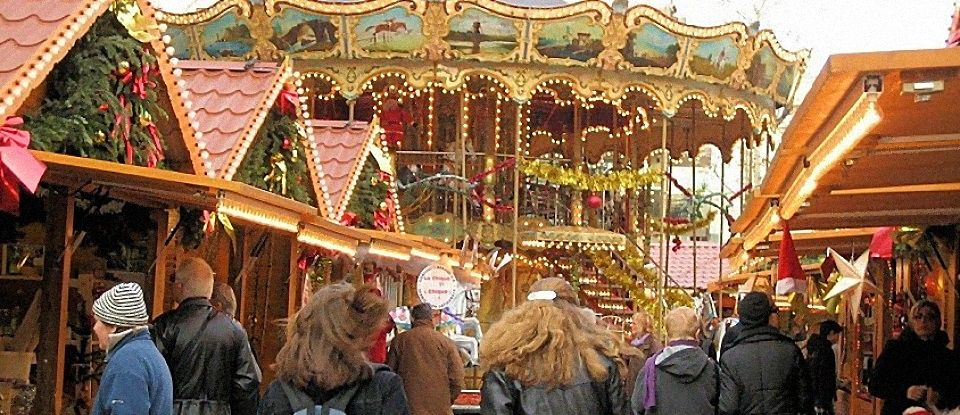
they decorate the “Sapin de Noel” (Christmas Tree), visit the Christmas Markets which take place in many towns – usually made up of stalls resembling log cabins,  and are full of local arts and crafts as well as traditional fare.  There are also many “Expositions of Santons” – the traditional figures carved of wood or formed from clay which first appeared at a Christmas fair in Marseilles in 1803.  They quickly became one of the well loved traditions of a Provencal Christmas and have progressed to be representative of each village with the figures carefully formed and dressed to represent the local inhabitants – for example,  the mayor, the boulanger, the boucher, the epicier, the café owner etc etc.  The village of Seguret, (Sablet’s close neighbor) has a Santonnier and each Christmas hosts an “Exposition des Santons”  in which many of the Master Santonniers of the regions display their interpretations of their village scene of Nativity.

The Nativity (”Creche”), is an important decoration in Provence as according to legend, Jesus was born in Provence and each Creche represents the village at the time of his birth.


Although families in provence feast on the typically  French Christmas fare such as Foie Gras, Turkey, Game Hens or Goose, as a part of the Christmas Day meal, certain foods and customs remain very much a part of the festivities.
They begin on Christmas Eve with the Gros Souper.

The Gros Souper (or Big Supper), is eaten before Midnight Mass and is a traditionally “meatless” meal.  Possibly the best known feature of the meal is the “Thirteen Deserts”

(les Treize Deserts).


 The evening proceeds as follows:  The table is laid with three tablecloths (one on top of the other).  During the following days each one will be uncovered as the festivities progress.  Three large white candles also make up the setting – symbolizing the Holy Trinity and hope.  The meal begins with the “Cache fio” or lighting of the fire.  The Oldest member of the family and the youngest, carry a fruitwood log (usually cherrywood or olivewood sprinkled with sweet wine) to the fireplace - circling the dining table three times.  The Gros Souper is a simple meal and consists of seven meatless dishes (to symbolize the seven sorrows of Mary).  Amonsgt the dishess very often served are “L’Aigo Boulido” – a garlic and herb soup,  “Brandade de Morue” – a puree of salt cod with garlic, olive oil and cream as well as a selection of vegetable dishes and local cheeses.  The meal ends with “les Treize Deserts” or the thirteen deserts*.


On Christmas Day,  children open the gifts left for them by le Pere Noel (Santa) and his helper, Pere Fouettard, who have traveled through the land visiting each home to reward the good children of each household  with gifts.  Before going to bed the night before, the children leave their shoes by the fireplace – to be filled by Pere Noel.


Festivities continue during the following days including St. Sylvestre (New Year’s Eve), which is celebrated with family and friends - through to Jan 6th – the Feast of the Three Kings when the traditional “Galette des Rois” a brioche sprinkled with crystalizd fruit is served to celebrate the day that the three kings reached the baby Jesus.  At this time the Santons of the Kings are placed in the crèche.


Amongst all the festivities and the traditions – Provence, most of all,  remains and place where families gather and friends meet to celebrate the season of joy
– Provencal style ...... bien sur!


Joyeux Noel et Bonne Annee a tous!!!  ……. et  n’oubliez pas …BON APPETIT!!


*The Thirteen Deserts – Les Treize Deserts

The thirteen deserts symbolize Christ and the twelve apostles.  Although the items can vary, they most commonly include:


Four Mendiants (the Monks who have taken a vow of poverty)
        
Raisins for the Dominicans
        
Almonds for the Carmelites
        
Dried Figs for the Franciscans
        
Hazelnuts for the Augustines

    
        Four Poors
        
Apples
        
Pears
        
Mandarines
        
Dates

        
Four Riches (any combination of these)
        
Confit Fruit
        
Nougat Blanc
        
Nougat Noir
        
Conig – Quince paste
        
Panade – Apple Tart
        
Calisson – Marzipan candy, specialty of the Aix-en-Provence area


        Fougasse or Pompe a Noel (Olive oil bread)


RECIPE:    Panade – Apple Tart with almond frangipane

 1 Recipe Galette Dough
        
1 cup Flour
        
1 teasp. Sugar
        
¼  teasp. Salt
        
6 tabsp. Butter – chilled and cut into 1 inch cubes
        
3 – 4 tabsp iced water

         Combine flour, sugar and salt.  Add butter and cut into flour mixture.  Add 3 tabsps. Water and continue mixing until dough comes together.  If dough is dry, add another tabsp. of water.  Gather dough together and wrap in plastic wrap.  Refrigerate for at least 30 mins.  the dough can also be froze at this point.

 1 Recipe Frangipane
    
     3 ounces Almond Paste
        
 3 tabsp. salted butter – at room temp.
        
   teasp. Sugar
         
  tabsp. Flour
        
1 Egg
        
1/3 cup Cream

         In a stand mixer, combine almond paste, butter, sugar and flour.  ‘beat on medium speed until smooth.  Add egg and cream - beat on low until incorporated.  Use at room temp  Frangipane can be stored in the refrigerator for up to two weeks.

  To assemble Panade:

1 Recipe Frangipane

1 Recipe Galette dough

4 Apples – Sierra Beauty or Golden Delicious – peeled and thinly sliced.

¼ cup melted butter

1/3 cup sugar

         Roll galette dough into a large round 1/8 inch thick.  .  Place dough in a parchment lined tart shell.  Spread with Frangipane.  Place sliced apples over top of frangipane in concentric circles.  Pull edges of dough into the center to create a ½ inch crust around the edges.  Brush the edges with butter.  Sprinkle with sugar and bake in a 400 deg oven for approx. 40 -45 mins.